The Murray Sisters Restoration
A Colonial Williamsburg Museum Project

Before Treatment
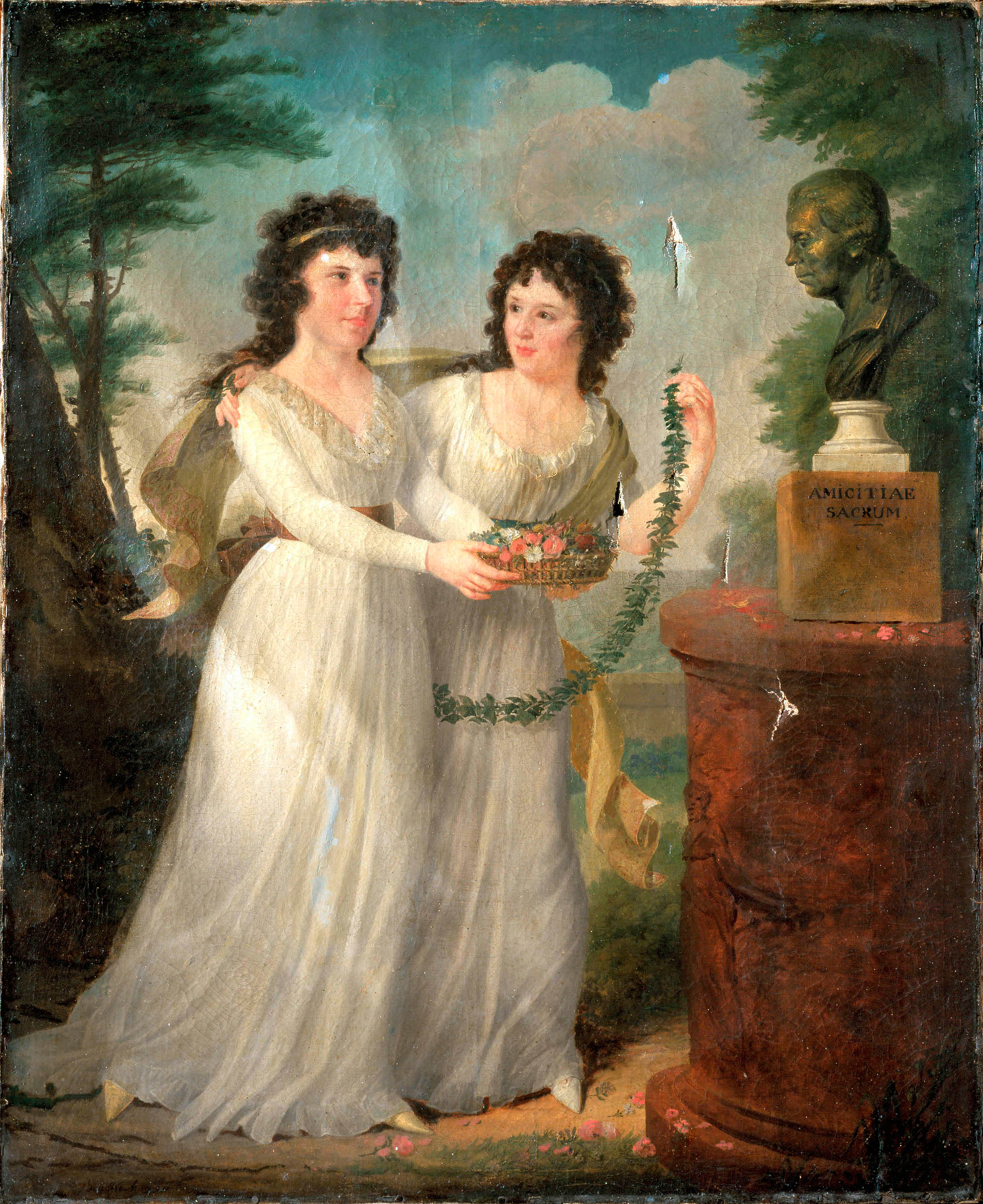
This double portrait of Sarah Scott and Anna Maria Murray, painted by Bouché in 1794, came to Colonial Williamsburg in bad condition. Natural aging, tears, and at least three previous inexpert restorations contributed to the damage.

Raking Light
Conservators illuminate the painting with a strong light from the left side, revealing deformities and losses in the canvas.

Infrared Reflectography
Infrared light penetrates to a hidden layer of pencil lines around the bottom of the two gowns and the shoes, as well as the inscription under the bust.
What now reads “AMICITIAE SACRUM,” or “Friendship is Sacred,” was originally lettered “LONGÈ & PROPÈ / MORS & VITA,” or “Far & Near, Death & Life.”

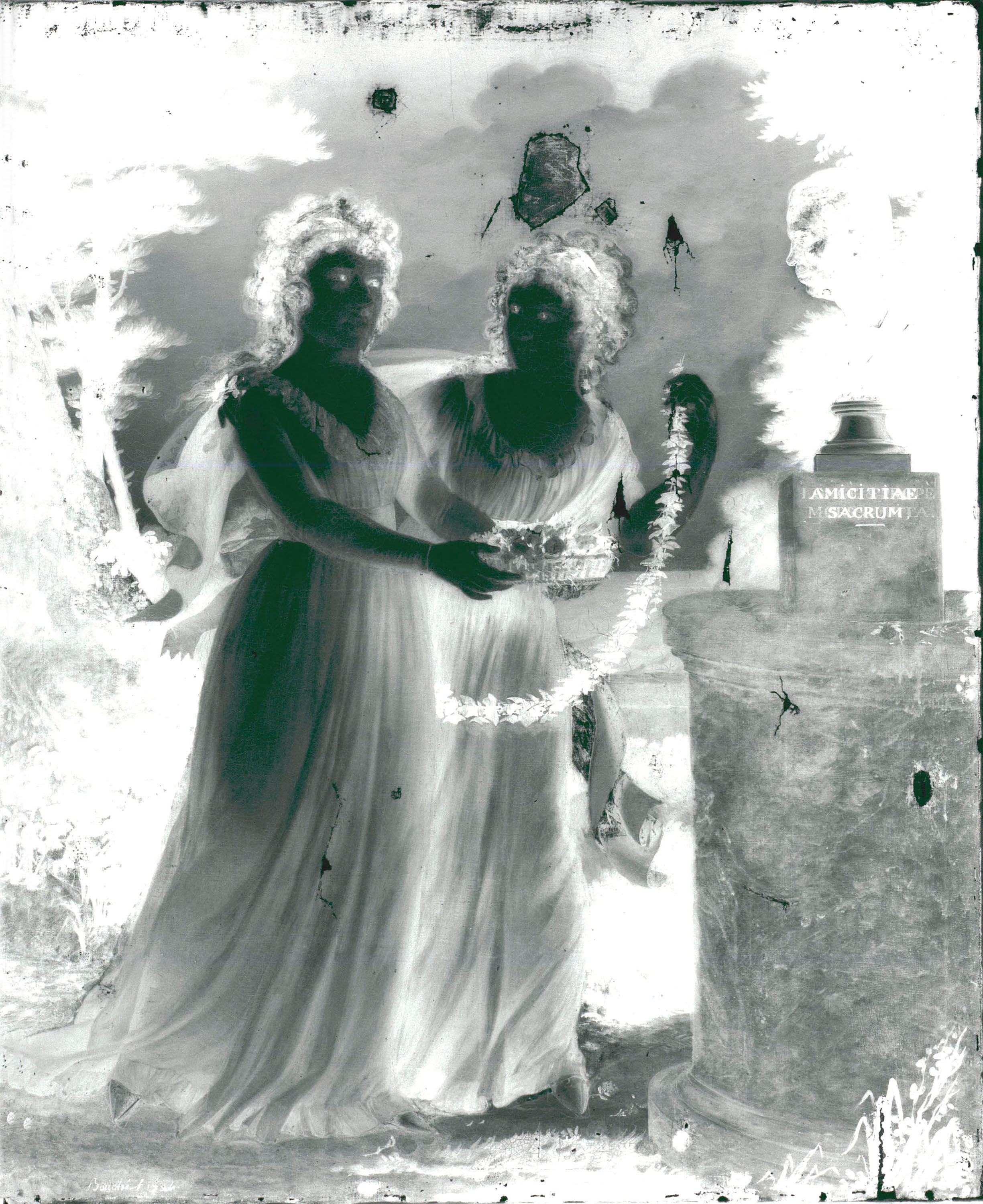
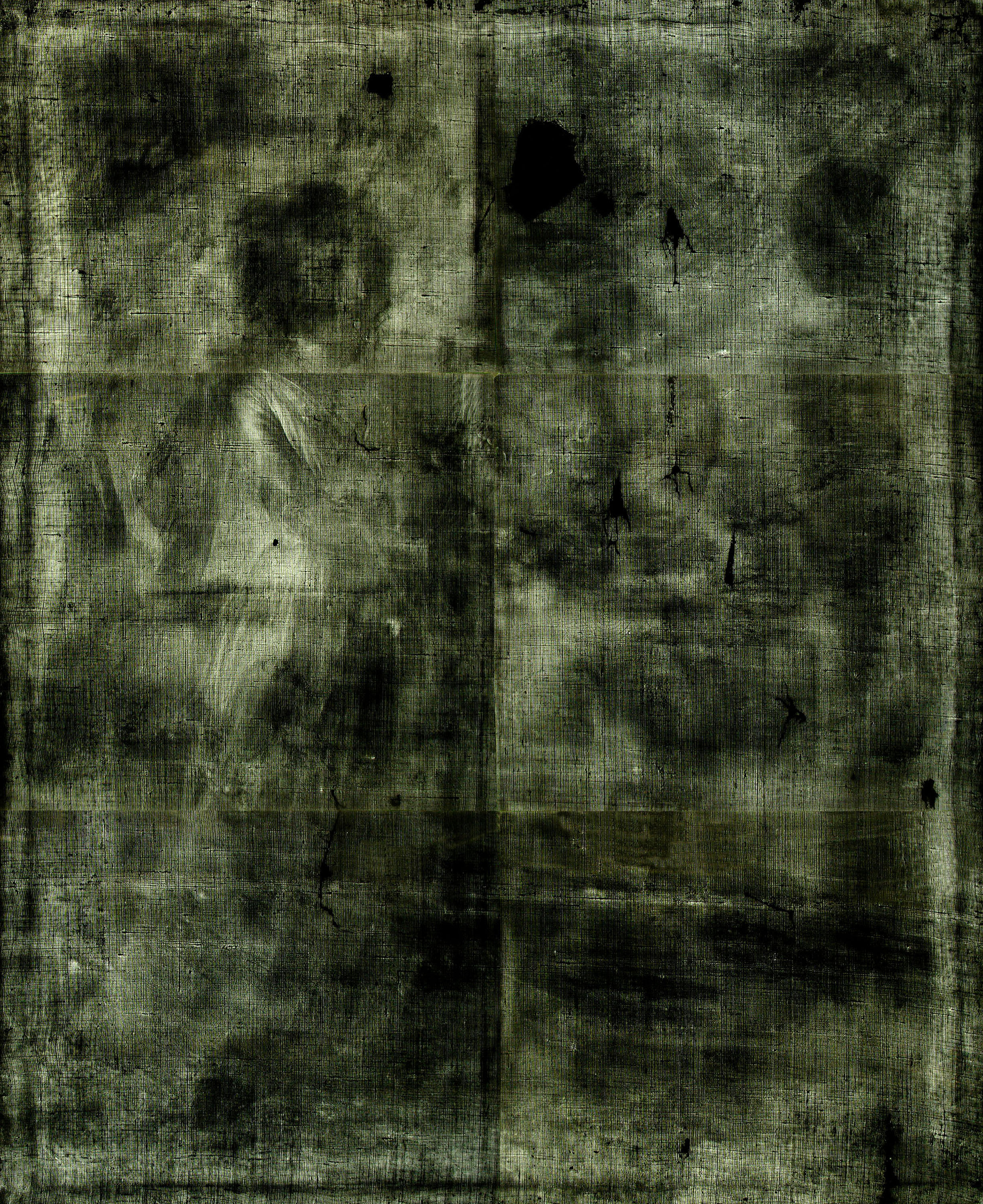
X-radiography
An x-ray tells conservators that the artist used a heavy metal pigment, such as lead white, in the skin tones and the sky. A comparison of weave singles out a piece of canvas inserted during a previous restoration.

Partially Cleaned
Removal of varnish, surface grime, overpaint, and discolored residual materials took several hundred hours.

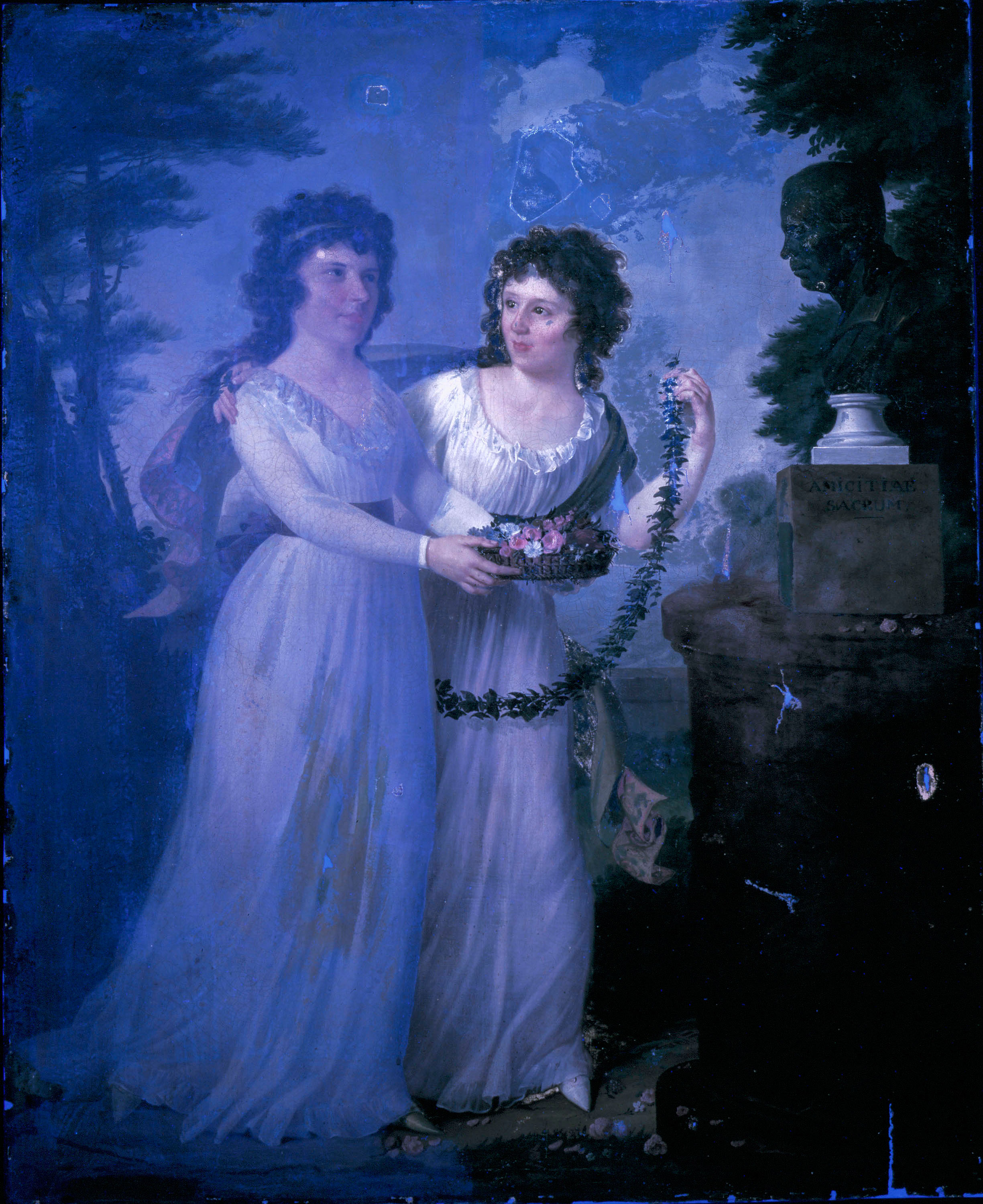
Ultraviolet Illumination
Under ultraviolet light, varnishes, resins, and pigments fluoresce. Overpainting and retouching appear as dark and non-fluorescent patches.
Old, discolored varnish makes a pale blue haze. The pink-orange fluorescence of the patterned ends of the shawl indicates the presence of madder, a bright red pigment.

Losses Filled
Missing canvas and ground layers are filled to prevent further damage and to reinforce the edges of the individual holes. These small areas are filled with a putty-like substance that appears here as white. These areas of fill will be inpainted using appropriate pigments.

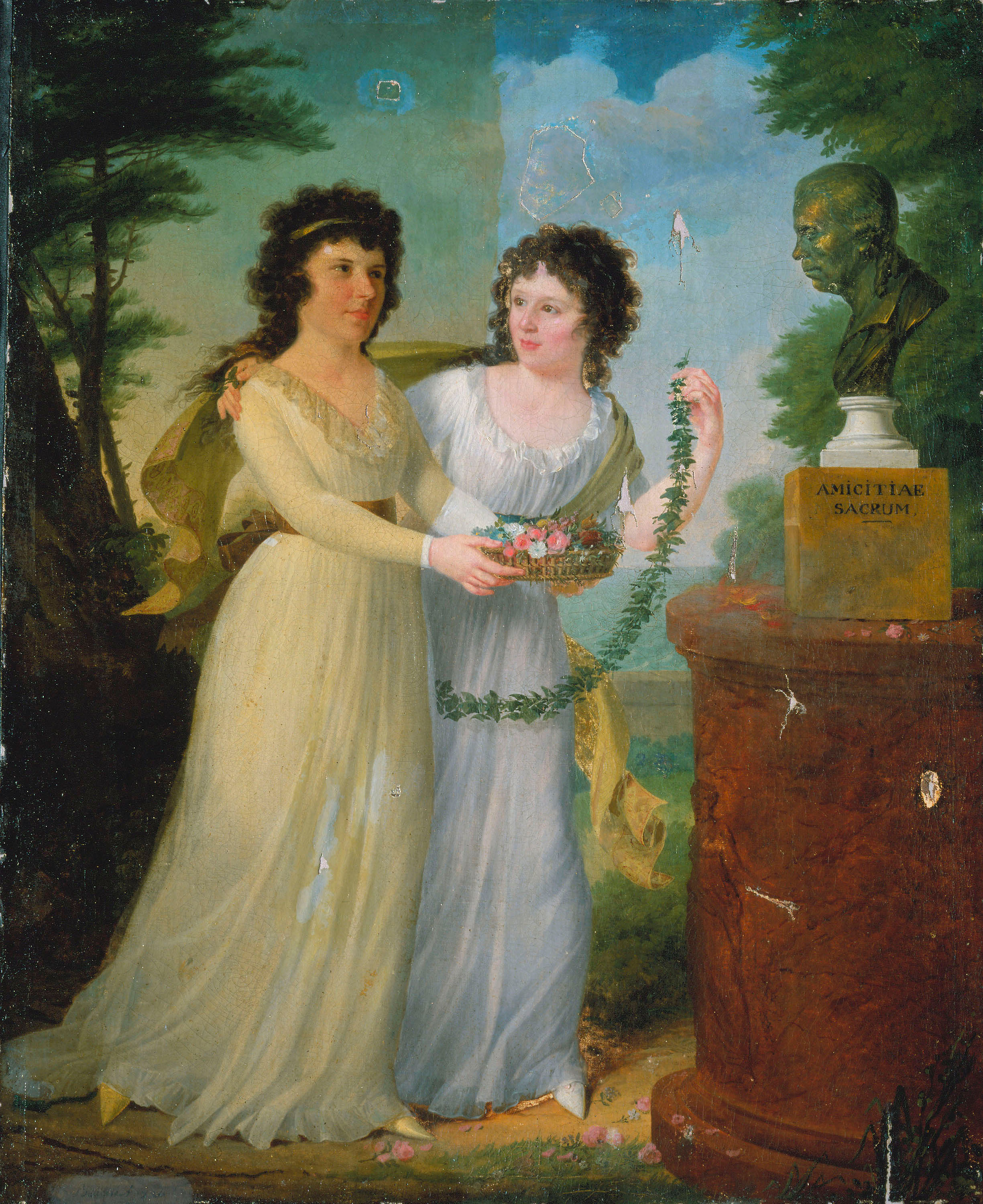
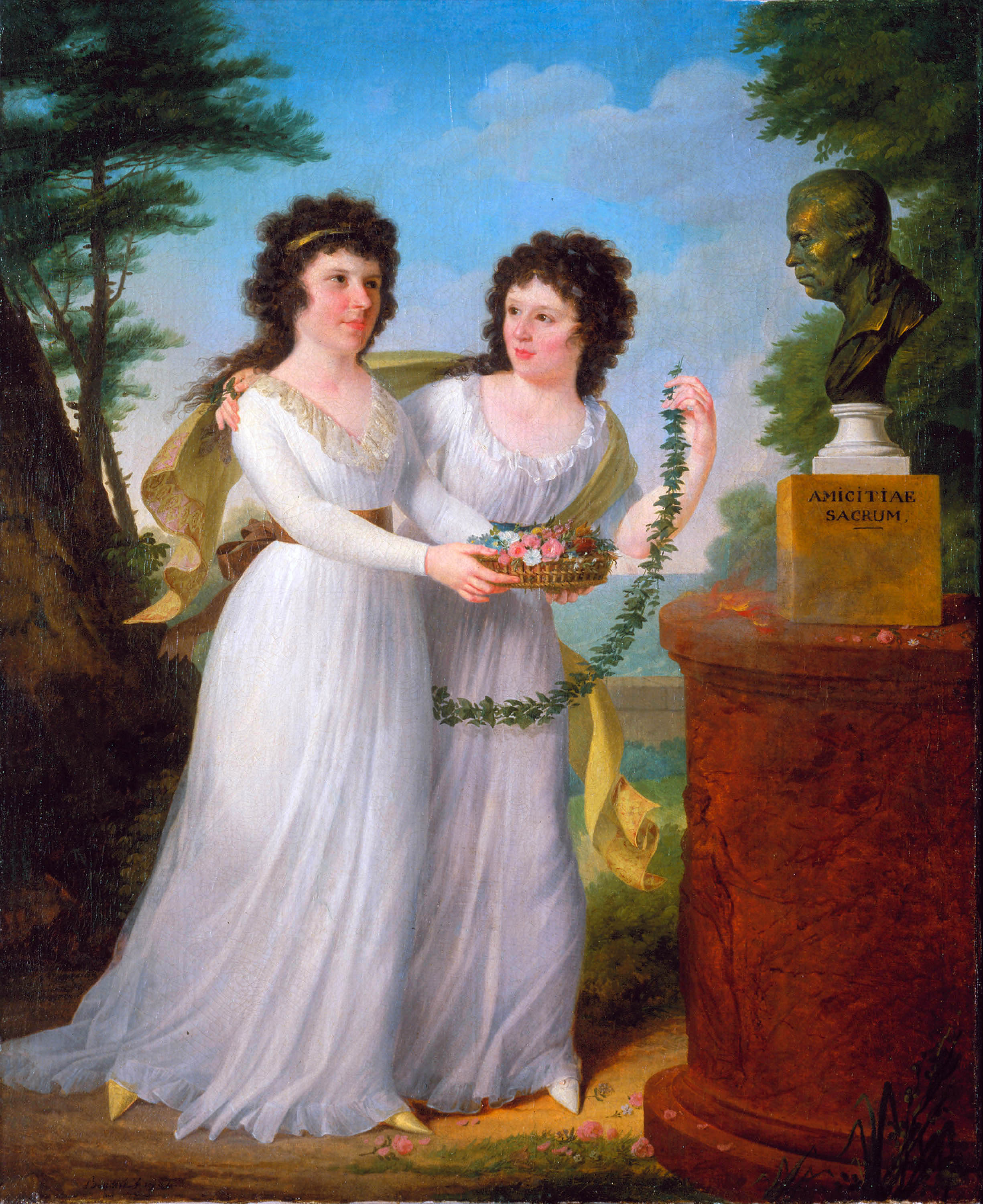
Final Image
The restored painting now hangs in the Southern Faces exhibition at the Museums of Colonial Williamsburg, more accurately reflecting how the painting looked when the artist finished it over two hundred years ago.